Understanding Sensory Processing at Home
Learn how sensory responses may influence dressing, feeding, grooming, play, attention and behaviour — and how to observe patterns in everyday routines.
Read Article →
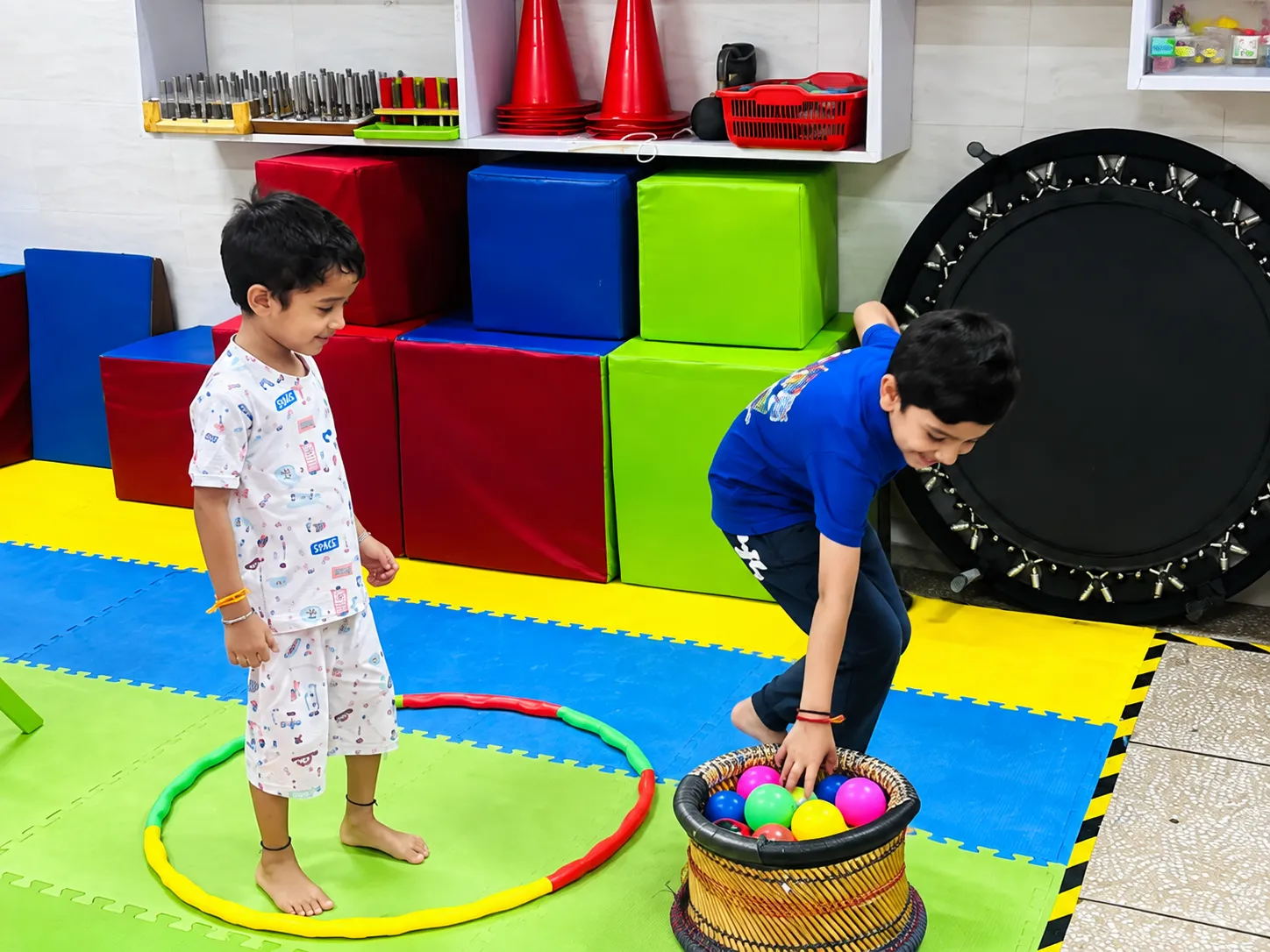
Every child develops at their own pace. However, persistent differences in communication, social interaction, attention, sensory responses, behaviour, learning, movement or everyday activities may indicate that additional guidance could be helpful.
At OTCloud, we help families understand their child's individual strengths, identify areas requiring support and determine the most appropriate next step through professional observation and assessment.
Development is not limited to speech or academic learning. It includes how a child communicates, plays, moves, responds to sensory information, manages emotions, learns new skills and participates in everyday activities.
Explore the areas below to understand commonly observed concerns. These examples are not diagnostic criteria and may have different causes in different children.
Children develop communication through sounds, gestures, words, sentences and their ability to understand others.
Parents may notice
Social development includes noticing other people, sharing attention, participating in play and responding during social interaction.
Parents may notice
Sensory processing refers to how the nervous system notices, organises and responds to information from touch, sound, movement, vision, smell, taste and the body.
Parents may notice
Attention and self-regulation help a child remain engaged, shift between activities and manage their level of alertness.
Parents may notice
Behaviour is a form of communication. Persistent behavioural difficulties may reflect challenges with communication, sensory regulation, flexibility, emotional regulation or environmental demands.
Parents may notice
Learning involves attention, memory, problem-solving, language, visual processing and the ability to participate in classroom routines.
Parents may notice
Movement development includes posture, balance, strength, coordination, mobility and hand function.
Parents may notice
Daily living skills help children participate independently in their home, school and community routines.
Parents may notice
The examples above are general observations and do not confirm a developmental disorder. Similar behaviours may arise from different developmental, medical, sensory, emotional, environmental or learning-related factors. A professional evaluation considers the complete developmental profile of the child.
Developmental milestones are skills that many children acquire within a general age range. They provide useful reference points, but they should not be used as a test or diagnosis. Select your child's age to review skills that may be developing and signs that may be worth discussing with a professional.
Clinical note: Concerns involving feeding, swallowing, hearing, vision, growth, unusual movements or loss of skills should also be discussed promptly with your child's paediatrician.
Clinical note: Children do not all crawl in the same way, and some may skip conventional crawling. The overall quality and progression of movement are more informative than one isolated milestone.
Clinical note: Loss of previously acquired language, social or movement skills should not be managed through a wait-and-see approach. Discuss regression promptly with a paediatrician or developmental professional.
Clinical note: At two years, communication involves more than the total number of words. Professionals also consider gesture use, understanding, social communication, imitation, play and whether the child is beginning to combine words meaningfully.
Clinical note: Speech clarity, social participation, attention and independence develop gradually. Concern becomes more significant when a difficulty is persistent, occurs across environments or interferes with the child's everyday participation.
Clinical note: School-age concerns should be understood in relation to classroom expectations, teaching opportunities, language exposure, emotional wellbeing, sensory needs and the child's overall developmental profile.
Clinical note: For older children, concerns are often best understood through information from the child, parents, teachers and relevant professionals rather than through a milestone checklist alone.
A single isolated behaviour does not necessarily indicate a developmental concern. Consider seeking professional guidance when a difference is persistent, appears in more than one environment or begins to interfere with the child's learning, relationships, independence or everyday participation.
Parents know their child best. If you remain concerned, it is appropriate to ask for professional guidance even when other people suggest waiting.
Some developmental concerns benefit from input from both therapy professionals and medical professionals.
Contact your child's paediatrician when concerns involve:
Seek urgent medical help for sudden loss of movement or awareness, breathing difficulty, choking, severe injury, prolonged seizure activity or any situation in which the child appears acutely unwell.
You do not need to have a diagnosis before asking for guidance.
Speak with our team about what you have noticed, how long it has been present and whether it is affecting your child's participation at home, school or in the community. A preliminary conversation can help determine whether your child may benefit from an assessment, another professional referral or continued developmental monitoring.
Understanding conditions beyond the diagnosis.
Children may come to OTCloud with an existing diagnosis, a professional referral or developmental concerns that have not yet been formally identified.
A diagnostic label alone does not determine the intervention plan. Recommendations are based on the child's functional abilities, developmental profile, participation needs and family priorities.
Autism is a neurodevelopmental condition that can influence social communication, interaction, play, flexibility, behaviour and sensory processing. Every child is different, and strengths and support needs can vary considerably.
Parents may notice
How OTCloud may support
Support may focus on communication, social interaction, play, sensory regulation, learning, behaviour and everyday independence.
ADHD can affect attention, activity level, impulse control and self-regulation. These differences may influence participation at home, school and in social situations.
Parents or teachers may notice
How OTCloud may support
Intervention may focus on attention, self-regulation, classroom participation, routines, behaviour and functional skills.
Learn More About ADHD →Speech and language difficulties can affect how a child understands language, expresses ideas, communicates needs or produces speech clearly.
Parents may notice
How OTCloud may support
Speech and Language Therapy may address receptive language, expressive language, speech development, social communication and functional communication.
Some children develop skills more slowly across one or more developmental areas. Understanding the child's overall developmental profile helps identify where support may be useful.
Areas that may be affected include
How OTCloud may support
Support may focus on early development, communication, motor skills, learning, play and everyday independence.
Learn More About Developmental Delay →Cerebral Palsy primarily affects movement and posture and may also influence coordination, hand function, communication and participation.
Areas that may need support
How OTCloud may support
Therapy can focus on functional movement, mobility, hand skills, positioning, independence and participation in everyday activities.
Learn More About Cerebral Palsy →Down Syndrome is a genetic condition associated with differences in physical development, communication, learning and overall development. Each child has individual strengths and support needs.
Areas that may need support
How OTCloud may support
Individualised therapy and educational support can help develop communication, motor, learning and everyday functional skills.
Learn More About Down Syndrome →Some children experience ongoing difficulties with coordination and motor planning that can make everyday and school activities more challenging.
Parents or teachers may notice
How OTCloud may support
Occupational Therapy may focus on motor coordination, motor planning, fine motor skills, handwriting and functional independence.
Learning difficulties can affect the development and use of academic skills. They may become more noticeable as school demands increase.
Areas that may be affected
How OTCloud may support
Special Education and Occupational Therapy can support foundational learning, academic skills, attention, classroom participation and functional learning strategies.
Learn More →Children may respond differently to sensory information such as sound, touch, movement, textures, lights or smells. These responses can affect regulation and everyday participation.
Parents may notice
How OTCloud may support
Occupational Therapy may help children develop strategies for regulation and participation in everyday activities.
Learn More →Children may experience difficulties managing emotions, responding to expectations, following routines or adapting to changes.
Parents may notice
How OTCloud may support
Support may focus on understanding behaviour, building self-regulation, developing positive responses and improving participation at home and school.
Learn More →The information above describes broad areas of support and should not be used for self-diagnosis. Diagnostic evaluation must be completed by appropriately qualified professionals using clinical history, direct assessment and recognised diagnostic criteria.
Language development varies between children. By around two years, many children use meaningful words, gestures and are beginning to combine two words. Professionals also consider how well the child understands language, uses gestures, shares attention, imitates actions and communicates needs.
Consider seeking guidance if your child is not using words, gestures or another consistent means of communication; has difficulty understanding familiar language; or has lost words that were previously used. A speech and language assessment may include receptive language, expressive language, speech production, social communication, play and oral-motor or feeding abilities when relevant. Hearing should also be considered when speech and language development is delayed.
Occasional toe walking can occur while young children are learning to walk. Persistent toe walking may be associated with habit, tightness in the calf muscles, reduced ankle movement, sensory preferences, motor-control differences or certain neurological and developmental conditions.
Evaluation may be helpful when toe walking is frequent, continues beyond the early walking period, occurs mainly on one side, causes pain or falling, limits activity or is accompanied by stiffness, weakness or loss of skills. Depending on the presentation, guidance may be required from a paediatrician, paediatric physiotherapist, occupational therapist, orthopaedic specialist or neurologist.
A tantrum is commonly related to frustration, wanting something or difficulty accepting a limit. The child may remain aware of the response of people around them.
A meltdown is generally an involuntary state of emotional or sensory overload in which the child temporarily loses the ability to regulate effectively. Reasoning, punishment or lengthy explanations are usually not helpful during peak dysregulation. The distinction is not always simple — professionals consider what happened before the episode, the child's communication abilities, sensory environment, demands, duration, recovery and whether the pattern occurs across different settings.
Eye contact varies between individuals and cultures and should not be considered in isolation. Some children listen or communicate more effectively without maintaining direct eye contact.
Observe the child's broader social communication, including response to name, use of gestures, shared enjoyment, joint attention, imitation, play and ability to engage with familiar people. Avoid repeatedly forcing the child to look directly at you. Seek professional guidance when reduced eye contact occurs alongside other persistent communication, interaction, play or developmental concerns.
Some behaviours reduce naturally as communication, regulation and coping skills develop. Others may continue when the underlying developmental, sensory, communication, learning or emotional need remains unaddressed.
Rather than waiting only for the behaviour to disappear, observe its frequency, intensity, triggers and effect on daily participation. Persistent concerns are better understood through professional assessment than through assumptions about whether the child will outgrow them.
No. An assessment helps professionals understand the child's strengths, current abilities and areas requiring support. It does not automatically result in a diagnosis or a recommendation for therapy.
Depending on the findings, recommendations may include developmental monitoring, parent guidance, school strategies, therapy, medical evaluation or referral to another qualified professional.
The appropriate professional depends on the concern:
Some children benefit from a multidisciplinary assessment when concerns involve several developmental areas.
Information from teachers and relatives can be helpful, but parents do not need to ignore a persistent concern. Developmental differences may be more visible in one environment than another.
Record specific examples, note how often they occur and discuss them with a qualified professional. An evaluation may provide reassurance, recommendations for monitoring or early support when required.
Reliable information can help families observe development more clearly, support everyday participation and make informed decisions without relying on fear or misinformation.
Learn how sensory responses may influence dressing, feeding, grooming, play, attention and behaviour — and how to observe patterns in everyday routines.
Read Article →A practical guide to communication, attention, motor skills, independence, social participation and learning readiness before school entry.
Read Article →Understand how shared attention, turn-taking, imitation, communication and flexible play develop through everyday interaction.
Read Article →You do not have to understand everything before asking for help. Speak with our team about what you have noticed, how long it has been present and whether it is affecting your child's communication, learning, relationships or everyday independence.
Prefer to speak directly? Call or WhatsApp +91 96670 83440.
Our team will understand your concern and help you identify the most appropriate next step.