
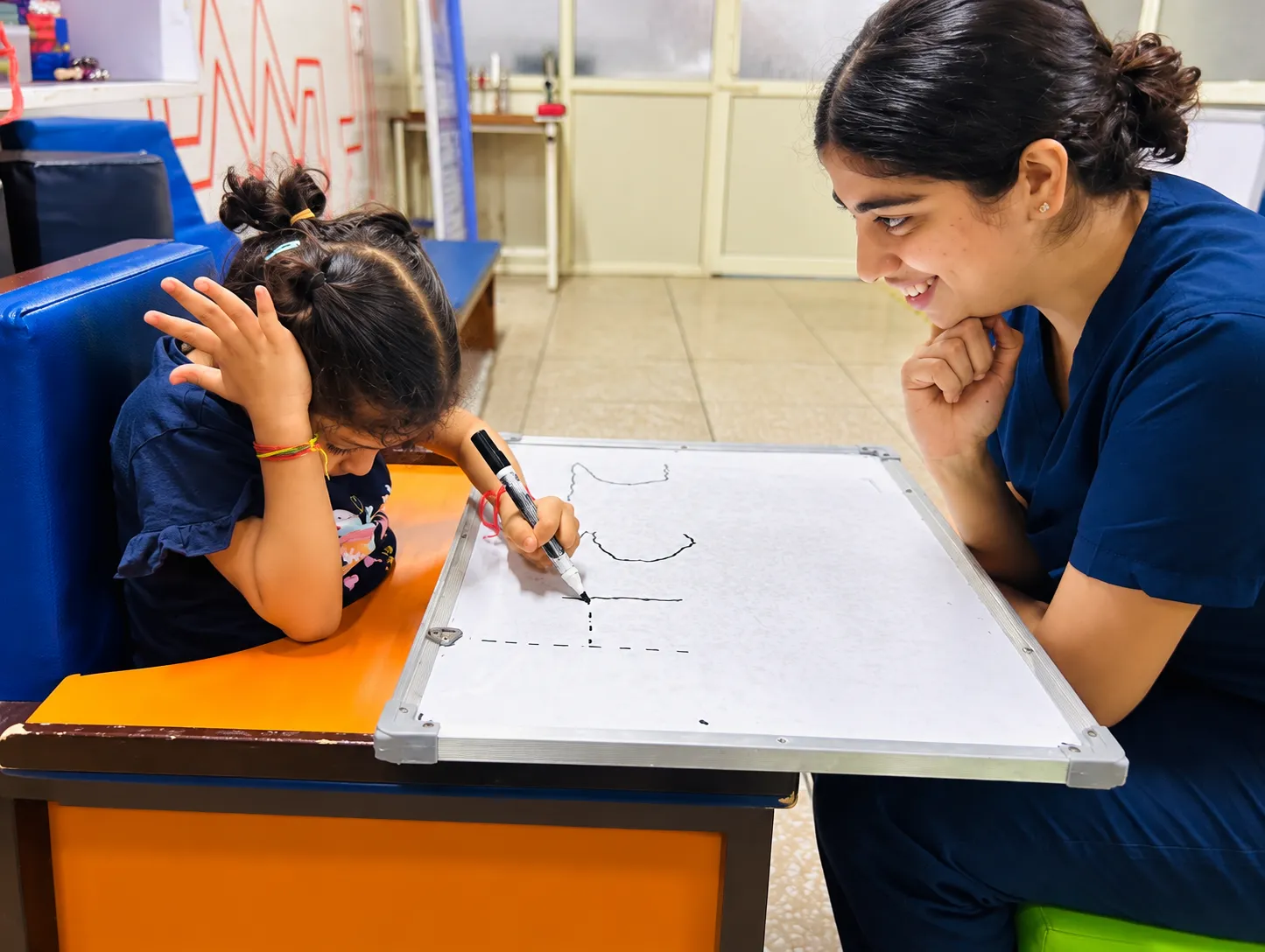
Understand Your Child. Plan the Right Next Step.
A professional child assessment helps us understand your child's strengths, current abilities and areas where support may be helpful \u2014 across communication, learning, movement, behaviour, sensory processing and everyday participation.
A Clearer Understanding of Your Child
Every child's developmental profile is different. Assessment helps us look beyond a single concern and understand how your child functions in everyday life.
Understand the Bigger Picture
Look at relevant developmental areas instead of focusing on one behaviour or skill.
Identify Priorities
Understand which areas are currently affecting communication, learning, participation or independence.
Plan the Right Next Step
Use the findings to guide therapy, home strategies, school support, further assessment or referral when appropriate.
Assessment That Looks at the Whole Child
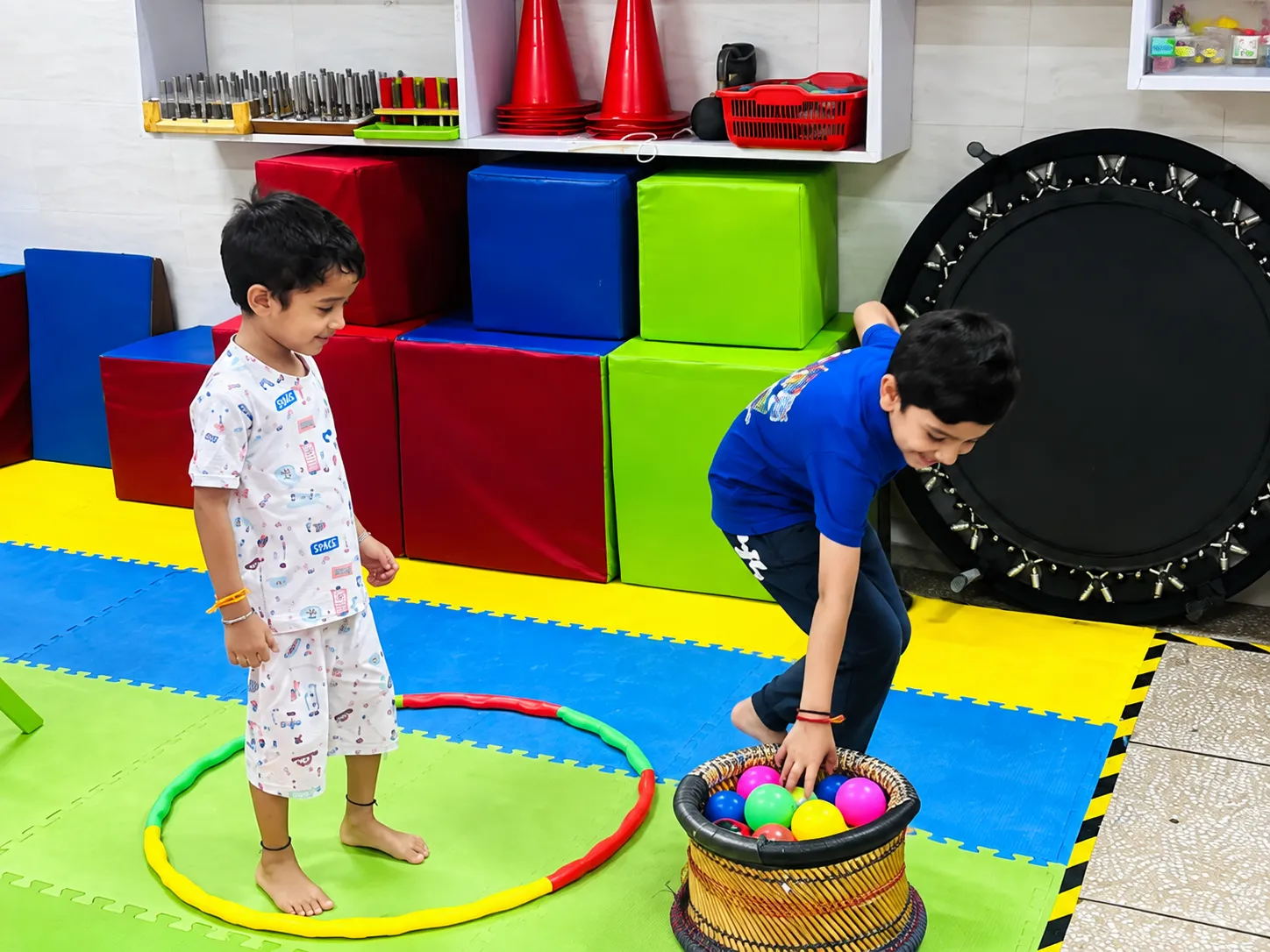
We don't assess a child only for a specific concern. We consider their strengths, abilities, environment and everyday participation to build a meaningful understanding of their needs.
Whole-Child View
We consider relevant areas such as communication, learning, movement, behaviour, sensory processing and daily skills.
Function-Focused
We look at how skills affect everyday activities at home, school and in the community.
Strength-Based
We identify existing abilities and emerging skills alongside areas that may need support.
Family-Informed
Parent observations, developmental history and family priorities are an important part of the assessment.
Evidence-informed · Individualised · Multidisciplinary when needed
What May Be Evaluated?
Assessment areas are selected according to your child's age, concerns and assessment purpose. Every child does not need every area to be assessed.
Communication & Language
Speech, understanding, expression and functional communication.
Attention, Thinking & Learning
Attention, problem-solving, cognitive and learning-related skills.
Motor & Coordination
Fine motor, gross motor, coordination and visual-motor abilities.
Sensory & Regulation
Sensory processing, regulation and responses to everyday sensory experiences.
Social, Behaviour & Emotional Skills
Social interaction, play, behaviour and emotional regulation.
Everyday Independence
Self-care, daily living, feeding/mealtime participation and functional skills.
Depending on the child's needs, assessment may also consider school participation, psychological functioning and performance across different environments.
Our Six-Step Assessment Process
A structured process designed to provide better understanding while respecting the child's individual pace and participation.
Initial Consultation
Understanding Your Concerns
We begin by discussing what you have noticed, how long it has been present and how it affects your child at home, school or in the community. We may ask about:
- Pregnancy and birth history
- Medical and developmental history
- Communication and play
- Movement and sensory responses
- Behaviour and emotional regulation
- Learning and school participation
- Daily living skills
- Previous assessments or intervention
- Parent and teacher priorities
Assessment Planning
Selecting the Relevant Areas
The professional reviews the available information and determines which areas require evaluation. The plan may include:
- Parent or teacher questionnaires
- Clinical observation
- Play-based activities
- Structured tasks
- Standardised tools, when appropriate
- Functional assessment
- Review of schoolwork, reports or videos
- Referral to another discipline when required
Every child does not complete every test.
Child Observation and Assessment
Understanding the Child Through Participation
Your child participates in age-appropriate activities selected according to the assessment purpose. Depending on the concern, the professional may observe:
- How the child communicates and understands
- How the child plays and interacts
- Attention and response to instructions
- Sensory and emotional regulation
- Posture, movement and coordination
- Hand function and tool use
- Learning and problem-solving
- Daily living abilities
- Response to support, demonstration or environmental changes
The pace may be adjusted to support comfort and participation.
Scoring and Clinical Interpretation
Bringing the Information Together
Assessment results are not interpreted as isolated scores. The professional considers:
- Parent and teacher information
- Developmental and medical history
- Direct clinical observation
- Structured-task performance
- Assessment scores, when applicable
- Functional effect on everyday activities
- Environmental supports and barriers
- The child's behaviour and participation during assessment
This information is synthesised to identify patterns of strengths, difficulties and support needs.
Findings and Parent Consultation
Explaining What the Findings Mean
A feedback consultation is conducted to explain:
- The child's identified strengths
- Areas requiring support
- How the findings relate to parent concerns
- Functional implications at home or school
- What the assessment can and cannot conclude
- Whether further evaluation is recommended
- Possible next steps
Parents are encouraged to ask questions and clarify anything they do not understand.
Recommendations and Next Steps
Planning the Most Appropriate Way Forward
Recommendations are individualised and may include:
- Developmental monitoring
- Parent guidance
- Home-based strategies
- School recommendations
- Single-discipline therapy
- Multidisciplinary intervention
- Further assessment
- Medical or diagnostic consultation
- Referral to another qualified professional
Assessment does not automatically mean that therapy will be recommended.
How Can Parents Prepare?
A little preparation can help us make the assessment more useful and comfortable for your child.
- Bring Relevant Reports Previous therapy, medical, developmental or school reports, when available.
- Share Your Concerns Think about the skills or situations you would most like us to understand.
- Comfort Matters Children may need time to become familiar with a new environment and professional.
- Parent Participation Your observations and information help us understand your child's everyday functioning.
You don't need to collect every document before contacting us. Our team will guide you on what is relevant for your child's assessment.
Frequently Asked Questions
How long does a child assessment take?
Assessment duration depends on the child's age, concerns, type of assessment and number of areas being evaluated. Some assessments may be completed in one session, while detailed assessments may require more time or multiple sessions.
Can parents stay during the assessment?
Parent involvement depends on the child's age, comfort and assessment requirements. Parents may be asked to remain present for part or all of the session.
What if my child is shy or does not interact with the therapist?
Children may need time to become comfortable. We may begin with familiar, play-based or low-demand activities and use observation to gather meaningful information.
What if my child becomes overwhelmed during the assessment?
The session can be adapted with breaks, changes in activity or a different approach depending on the child's needs.
What should I bring to the assessment?
Bring relevant previous reports, school information, work samples or other documents that may help us understand your child's history and current needs.
Does an assessment mean my child will need therapy?
Not necessarily. Recommendations are based on the assessment findings and your child's current needs. They may include guidance, monitoring, therapy, school strategies or further referral.
When will we receive the findings?
The timeline depends on the type and complexity of the assessment. The expected timeline will be explained by the team.
How much does an assessment cost?
Assessment fees vary according to the type and scope of assessment. Our team can explain the applicable fee before scheduling.
Do I need a doctor's referral?
No referral is needed. You can contact us directly to schedule an assessment for your child.
Can both parents attend the session?
Yes. We encourage both parents to join where possible — it gives us a fuller picture of your child's routines at home.
What age groups do you work with?
We support children from early infancy up to 14 years of age.
What types of therapy do you provide?
Occupational Therapy, Speech and Language Therapy, Child Physiotherapy, Special Education, Child Psychology and behaviour support, along with sensory integration approaches within occupational therapy.
How soon will we see progress?
This varies with the child and the goals set. Many parents notice meaningful change within a few months of regular sessions, and progress is formally reviewed at agreed intervals.
Can we get home strategies or activities to practise?
Yes. Families are given practical home activities and strategies so progress continues between sessions.
Not Sure What Assessment Your Child Needs?
Start with a conversation. Our team can understand your primary concern and guide you towards the most appropriate assessment or referral.
Submitting this form does not itself constitute an assessment or diagnosis.

Secure & confidential — handled per our Privacy Policy